
Lou Williams Defends SGA, But the Numbers Tell a Harder Story
Authored by prc-ayxsports.net, 22-07-2026
Shai Gilgeous-Alexander enters the offseason as a back-to-back NBA MVP, a champion, and, increasingly, a polarizing figure. The San Antonio Spurs' disciplined defensive scheme in the 2026 Western Conference Finals drew fresh scrutiny to one of the most debated aspects of his game - his reliance on drawing fouls - and the fallout has followed him all the way to the ESPY Awards, where he lost Best NBA Player to Jalen Brunson despite holding the sport's most prestigious regular-season individual honor.
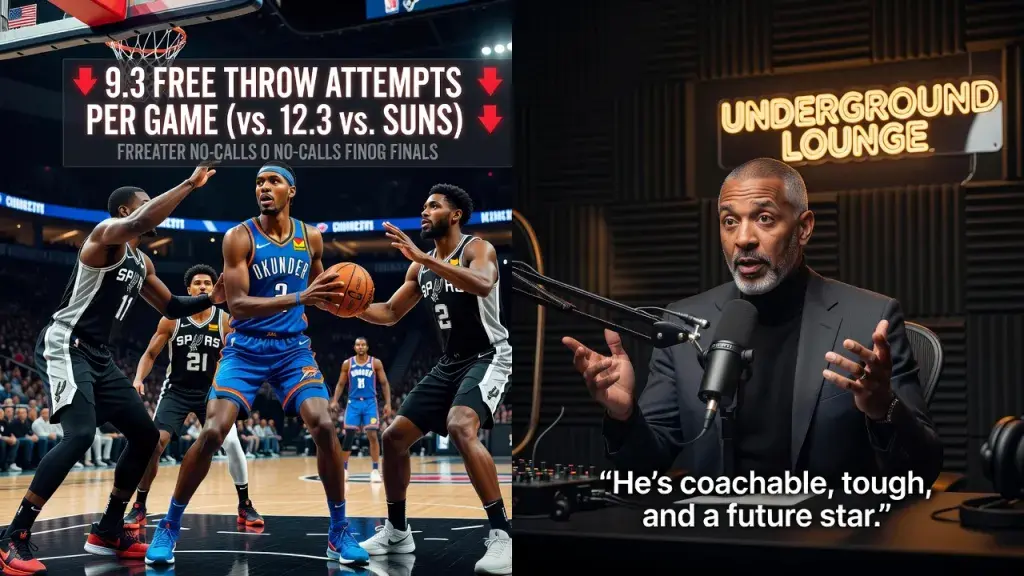
The conversation around Gilgeous-Alexander has been building throughout the 2025-26 season, fueled by a perception that too much of his production runs through the charity stripe rather than through pure shot-making or playmaking. Fans have grown increasingly vocal about it, and the label "Free Throw Merchant" has taken root on social media and in broadcast debate. It is worth noting that the criticism of star players leaning heavily on foul-drawing to pad their numbers is hardly new to basketball - across major sports worldwide, from orlando pirates news cycles to NBA discourse, fans and pundits consistently scrutinize whether elite performers earn their accolades through substance or system - and in SGA's case, the Spurs series gave the critics concrete ammunition. San Antonio, rather than crowding him and giving him the body contact he typically converts into free-throw opportunities, deployed a scheme disciplined enough to generate repeated no-calls when Gilgeous-Alexander went into his usual contact-seeking sequences.
The numbers reflect it plainly. Against the Phoenix Suns in the prior playoff round, SGA was at the line an average of 12.3 times per game. Facing the Spurs in the conference finals, that figure dropped to 9.3. That is not a collapse, but the drop-off was meaningful enough to fuel the argument that when opponents take away the foul-bait, his efficiency and impact become more ordinary than his MVP billing suggests.
Lou Williams Pushes Back With Personal Authority
Not everyone is willing to let the narrative run unchecked. Lou Williams, who shared a Clippers locker room with a young Gilgeous-Alexander, used a recent episode of his podcast Underground Lounge to offer a forceful character reference - and a clear signal that he has no patience for what he sees as reductive criticism.
"In our game, you want your young star to be coachable, a worker, one of the guys, the toughest, smartest," Williams said. "SGA was all of those things. He was one of the first rookies that I was on the team with that I said, 'Hey, that boy going to be a star.'" Williams went further, making clear that SGA's championship and MVP pedigree outweighs, in his view, whatever tactical adjustments opponents have made. "When I hear that s**t, I want him to prove everybody wrong," he added. Williams is not a disinterested observer - his affection for Gilgeous-Alexander is genuine and rooted in first-hand experience - but that does not automatically invalidate the point. Mentors who watched players develop from raw prospects carry a perspective that statistics alone cannot capture.
Brunson's Trophy Haul Reshapes the Best Player Debate
Whatever weight one assigns to the foul-drawing criticism, the ESPY result is the most concrete expression of the shift in public perception. Gilgeous-Alexander, despite winning the NBA's Most Valuable Player award for a second straight season - averaging 31.1 points, 6.6 assists, 4.3 rebounds, and 1.4 steals per game - did not win Best NBA Player at the ESPYs. Jalen Brunson did.
The logic behind Brunson's victory is defensible on its merits. He guided the New York Knicks to the NBA championship and, in the process, became the first player to win three separate MVP honors in a single season: the NBA Cup MVP, the Eastern Conference Finals MVP, and the NBA Finals MVP. No player had done that before. In a fan vote - which is what the ESPYs are - postseason heroics and a championship ring will almost always outweigh regular-season dominance, particularly when the regular-season honoree carries reputational baggage heading into the vote.
What the Summer Holds for SGA's Standing
The honest assessment is that Gilgeous-Alexander occupies a complicated position. His numbers are elite. His MVP awards are legitimate. His championship validates his ability to win when it matters. But the Western Conference Finals loss to San Antonio, combined with his deepening association with foul-baiting, has given critics a credible platform - and the ESPY snub has given that criticism institutional weight, however informal the ESPYs may be by league standards.
Lou Williams' loyalty is admirable and his eye for talent has been proven right. The question for Gilgeous-Alexander this offseason is whether he can recalibrate his game in a way that answers the Spurs' blueprint without abandoning what makes him dangerous. The Thunder will be back in contention, and opponents have now seen a workable defensive template. If SGA arrives next season with a more diverse scoring menu - reducing his dependence on contact plays and demonstrating he can carve up a disciplined drop coverage or switching scheme - the narrative will shift. If he doesn't, the gap between his MVP trophies and his public standing will keep widening.