
Tunisia Sack Lamouchi and Hand Renard Emergency World Cup Mandate
Authored by prc-ayxsports.net, 17-06-2026
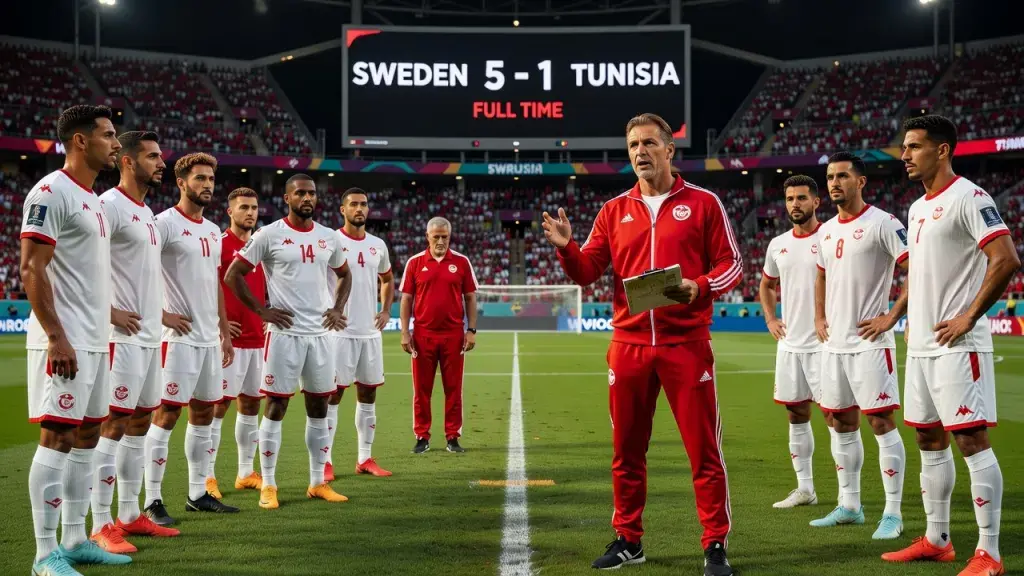
Tunisia have dismissed head coach Sabri Lamouchi following a 5-1 thrashing at the hands of Sweden in their opening World Cup group game and moved swiftly to appoint experienced French manager Hervé Renard as his replacement. The Tunisian football federation confirmed the change on Tuesday, with Renard's contract covering the remainder of the tournament only, leaving any longer-term arrangement to be negotiated once the group stage concludes. It is a drastic but not entirely unprecedented move for a nation that has never advanced beyond the World Cup group stage in six previous appearances.
Lamouchi, a former France international who had previously managed Ivory Coast at the 2014 World Cup, had been in charge of the Eagles of Carthage for less than six months before Sunday's collapse against Sweden ended his tenure. The margin of defeat was alarming by any measure, and the federation clearly felt that a change - however disruptive to preparation and team cohesion - was preferable to continuing with a staff that had failed to steady the ship. Much like a racing post dog pulled before a final heat, Lamouchi was given no opportunity to respond, the federation acting within 48 hours of the final whistle.
Renard arrives with credentials that few coaches operating in African and Arab football can match. He is the only coach to have won the Africa Cup of Nations with two different nations - Zambia in 2012 and Ivory Coast in 2015 - and has built a reputation as a tactically disciplined, motivationally astute manager who consistently extracts maximum effort from international squads with limited preparation time. He guided Morocco at the 2018 World Cup and took charge of Saudi Arabia at the 2022 edition in Qatar, where his side memorably defeated eventual champions Argentina in the group stage, one of the great upsets in recent World Cup history. He subsequently managed France's women's national team at the 2023 Women's World Cup before returning to Saudi Arabia's men's setup, a stint that ended in April after two pre-tournament friendly defeats led to his dismissal ahead of this competition.
A Task That Borders on the Impossible
Tunisia's situation is severe. A 5-1 defeat in the opening game leaves them with no margin for error, and the remaining fixtures - against Japan on Saturday and then the Netherlands on June 25 - represent a gruelling path back into contention. Japan are organised and dangerous in transition, while the Netherlands carry attacking quality that could punish any defensive fragility Tunisia showed against Sweden. Renard will have days, not weeks, to implement his ideas and restore basic structural confidence to a squad that was publicly humiliated on Sunday. Even at his best, this is a salvage operation rather than a genuine bid for knockout qualification.
A Pattern Tunisia Has Seen Before
This is not the first time Tunisia have resorted to a mid-tournament managerial change at a World Cup. In 1998, Henryk Kasperczak was dismissed following group-stage defeats to England and Colombia, with the team already eliminated before their final game against Romania. That precedent offers little comfort - Tunisia were unable to finish on a high even after the change. The broader football world has seen similar panic moves before: Spain famously sacked Julen Lopetegui two days before their opening group game at the 2018 World Cup after his appointment as Real Madrid's next manager was announced, a decision that generated enormous controversy and left his replacement with almost no time to prepare.
What Renard Brings - and What He Cannot Change
Renard's appointment is rational in the circumstances. If anyone can reorganise a squad psychologically and tactically within a matter of days, it is a coach with his track record in short-cycle international management. His Africa Cup of Nations victories were not accidents - they reflected an ability to build team unity and impose a clear defensive structure quickly. However, no coaching change can instantly address the quality gap that the Sweden scoreline exposed, nor can it undo the psychological damage of such a heavy defeat on the sport's biggest stage. Tunisia's players now face the dual challenge of performing for a new manager while carrying the burden of that result. Whether Renard can turn a damaged campaign into something meaningful will depend as much on the squad's response as on his tactical blueprint.