
Tunisia Sack Lamouchi and Turn to Renard After Sweden Humiliation
Authored by prc-ayxsports.net, 17-06-2026
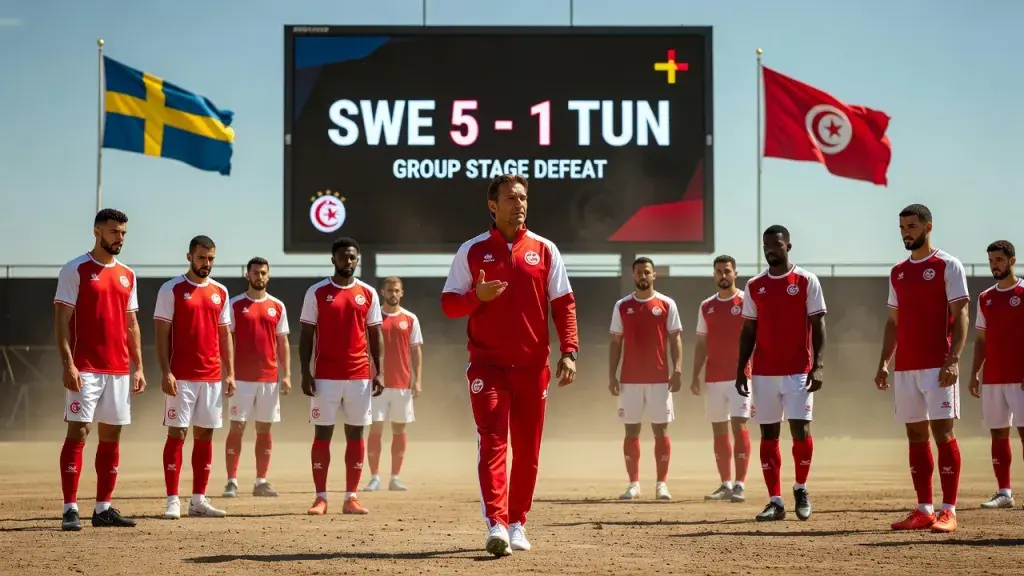
Tunisia have parted ways with head coach Sabri Lamouchi following a catastrophic 5-1 defeat to Sweden in their opening World Cup group game, with the Tunisian Football Federation confirming the split by mutual agreement on Tuesday. Hervé Renard, one of African football's most decorated international coaches, has been named as his replacement for the remainder of the tournament. Lamouchi has already departed the squad's base in Mexico, with Renard expected to arrive at the training camp imminently.
The speed of the decision underlines just how alarming that opening result was for a federation already under pressure after a disappointing Africa Cup of Nations campaign. Tunisia's exit at the round of 16 stage of AFCON in January, beaten by Mali, had set a troubling tone ahead of the World Cup, and the manner of the Swedish defeat - conceding five in a group-stage fixture - accelerated what had been growing unease around Lamouchi's tenure. In a football environment where patience is measured in results, not intentions, the federation moved decisively. It is worth noting that just as specialist communities use precise tools - whether racing post greyhound betting markets or detailed form guides - to assess performance, football federations increasingly apply hard metrics to coaching tenures, and Tunisia's data simply did not support continuation.
Lamouchi, 54, had been appointed in January and managed just one win in five matches - a 1-0 result against Haiti. That record, combined with the scale of the Sweden defeat, left the federation with little room for sentiment. He becomes only the second Tunisia coach to be dismissed during a major tournament, following Polish manager Henryk Kasperczak, who was sacked after two group-stage defeats at the 1998 World Cup on home soil in France.
Renard Steps In With Considerable Pedigree
The appointment of Hervé Renard brings immediate credibility to a squad that badly needs a psychological reset. The 57-year-old Frenchman has a record in African football that few international coaches can match: he won the Africa Cup of Nations with Zambia in 2012 and repeated the feat with Ivory Coast in 2015, making him the only coach to win AFCON with two different nations. He subsequently guided Morocco to the 2018 World Cup, then took charge of Saudi Arabia, overseeing one of the most shocking results in World Cup history when the Green Falcons defeated Argentina in the group stage at Qatar 2022.
Renard also had a brief tenure in charge of the France women's national team at the 2023 Women's World Cup before returning to Saudi Arabia, helping the country qualify for this tournament. He was dismissed from that post in April, leaving him available when Tunisia came calling. His appointment is a bold move - and a logical one. Renard understands the pressures of African football's international environment, the expectations that come with World Cup qualification, and the tactical demands of managing squads in compressed tournament schedules.
The Scale of Tunisia's Task Ahead
Whatever lift Renard's arrival provides, the arithmetic facing Tunisia is unforgiving. A five-goal defeat in the opening fixture means goal difference is already a serious concern, and the two remaining group games offer little comfort on paper. Saturday's match against Japan is effectively a must-win, or as close to it as the mathematics allow. The final group fixture against the Netherlands on June 25 presents an even more formidable obstacle.
Renard will have minimal time to implement new ideas before facing Japan, but his strength has typically been his ability to organise defences quickly and generate collective belief within squads. Whether that is enough to overturn the damage done in the Sweden fixture remains the central question hanging over Tunisia's World Cup campaign.
A Familiar Pattern in African Football's World Cup Story
Tunisia's mid-tournament coaching change reflects a broader tension that has occasionally surfaced in African football at major tournaments: the gap between qualifying achievement and the readiness to compete at the highest level. Africa regularly produces gifted individual players and technically capable squads, but maintaining coaching continuity and building a stable tactical identity across a full World Cup cycle remains an ongoing challenge for several confederations. Renard's appointment is in many ways a recognition of that reality - a highly experienced outside voice brought in to salvage what can be salvaged from a difficult situation. His track record suggests he will be competitive in outlook, but rescuing Tunisia from their current position will require something close to a perfect run of results.