
Tunisia and Japan Meet in World Cup's Historic 1,000th Match at Monterrey
Authored by prc-ayxsports.net, 19-06-2026
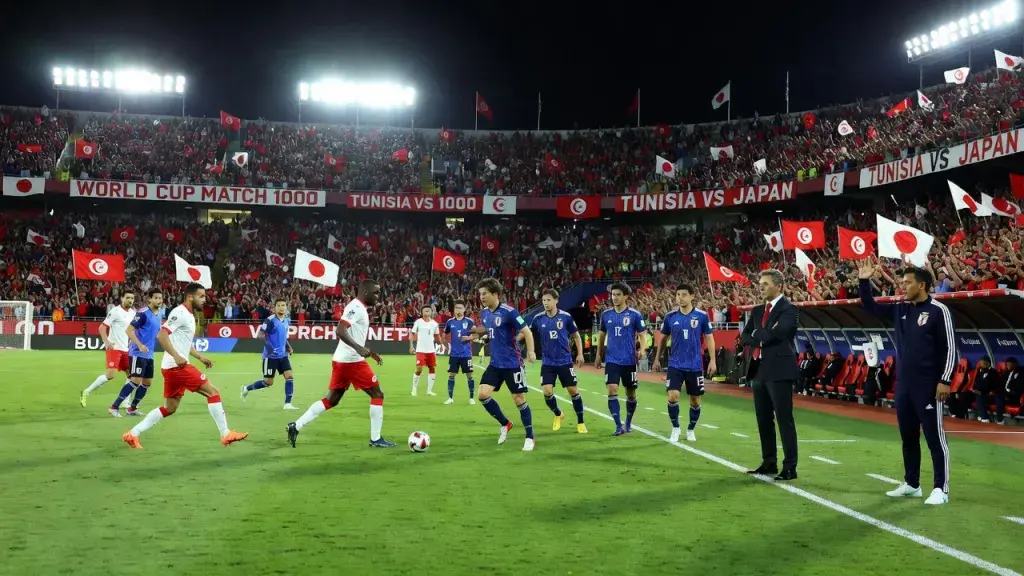
Ninety-six years after France beat Mexico 4-1 and the United States defeated Belgium 3-0 in Montevideo to launch the first-ever FIFA World Cup, the tournament reaches a milestone it could scarcely have imagined back in 1930: its 1,000th match. Tunisia versus Japan at the Estadio Monterrey carries that distinction, though for the Tunisians, the occasion arrives wrapped in crisis rather than celebration.
Tunisia's World Cup began in catastrophic fashion on Sunday, a 5-1 thrashing at the hands of Sweden representing their heaviest defeat in the tournament's history. By Tuesday, head coach Sabri Lamouchi had been dismissed - becoming the first manager ever sacked after just one World Cup game - and replaced by Hervé Renard. It is the kind of off-field turbulence more associated with the chaos of, say, bkb betting markets than the measured world of international football management, yet here we are, with Tunisia heading into match number 1,000 under a head coach who has had a matter of hours to prepare his squad.
Lamouchi's tenure was brief even by emergency standards: four games in total, two of which were scoreless defeats against Austria and Belgium in warm-up friendlies before the tournament began. The Tunisian Football Association, with games against Japan and then the Netherlands still to come, decided they had seen enough. It is not unprecedented behaviour from the federation. In 1998, they sacked Henryk Kasperczak after failing to win their opening two group matches - and still finished bottom of the group after drawing the third. History, it seems, has a tendency to repeat itself in Tunis.
Renard Inherits a Deeply Wounded Side
Hervé Renard arrives with more international management experience than almost anyone in the game. This is his ninth role at international level, having worked extensively with Zambia and Saudi Arabia among others, and having spent time in charge of France's women's team. He was originally due to be at this very World Cup in charge of Saudi Arabia, having successfully steered them through qualifying, before being replaced by Georgos Donis in April. The situation has a certain irony to it.
What Renard inherits is a team that conceded three goals from outside the penalty box against Sweden - only the second side on record, since 1966 tracking began, to do so in a single World Cup match, after Chile against West Germany in 1982. Goalkeeper Abdelmouhib Chamakh was directly at fault for two of those goals, posting an expected goals prevented figure of -2.88 on the night. Tunisia have only conceded more goals at a single World Cup edition in 2018, when they shipped eight, and in 2006, when they let in six. The scale of the defensive disintegration against Sweden gives Renard precious little margin for error here.
Japan's Resilience Built on Substitutes and Discipline
Japan arrive at this fixture in a very different frame of mind. Hajime Moriyasu's side came from behind twice to draw with the Netherlands in their opening game, and their record of grinding out results despite early setbacks is well established. Since 2018, Japan have played seven World Cup group matches, conceding in every one of them, yet have won three and drawn two of those seven. They have lost just one of the four tournament games in which they have conceded first.
A significant part of that resilience is structural. Five of Japan's seven World Cup goals since the 2022 tournament began have involved substitutes - three scored, two assisted by players brought off the bench. The 89th-minute equaliser against the Netherlands was emblematic: substitute Koki Ogawa's effort deflected in off Daichi Kamada's head, but the intent and the pressure was manufactured by Moriyasu's willingness to trust his bench. It is a tactical signature that makes Japan particularly dangerous in the closing stages of matches.
One player worth monitoring closely is central defender Shogo Taniguchi. The 34-year-old Sint. Truiden man is a late-career international, with most of his caps accumulated after his thirtieth birthday, but his quality on the ball is exceptional. Against the Netherlands, he completed 49 of 50 passes - a 98% success rate, the highest ever recorded by a Japanese player with 50 or more pass attempts in a World Cup match. He also registered eight line-breaking passes in that game, fewer only than Virgil van Dijk and Jan Paul van Hecke. For a back-three centre piece, that is a remarkable output.
History and the Weight of a Milestone Fixture
Tunisia and Japan have met at the World Cup once before, in the 2002 group stage in Japan, where the hosts won 2-0 in a match remembered partly for Hidetoshi Nakata's only goal at the tournament. In six meetings across all competitions, Tunisia have beaten Japan just once - a 3-0 Kirin Cup win on Japanese soil in June 2022. The other five have all gone Japan's way.
Japan's record against African nations at the World Cup has been more mixed in recent editions. After winning their first two such encounters, they lost to Ivory Coast 2-1 in 2014 and drew 2-2 with Senegal in 2018. Tunisia represent another test of that record.
The Opta supercomputer gives Japan a 61.3% probability of winning across 25,000 simulations, with a draw the next most likely outcome at 22.9% and a Tunisia victory at 15.8%. Those numbers reflect form and context, not inevitability. Football's 1,000th World Cup match will be played under the Monterrey floodlights with very real group-stage consequences for both sides - and with Tunisia's coaching staff having barely had time to unpack. The occasion deserves a memorable game. Whether Tunisia can provide one under such extraordinary circumstances is the defining question of the evening.